
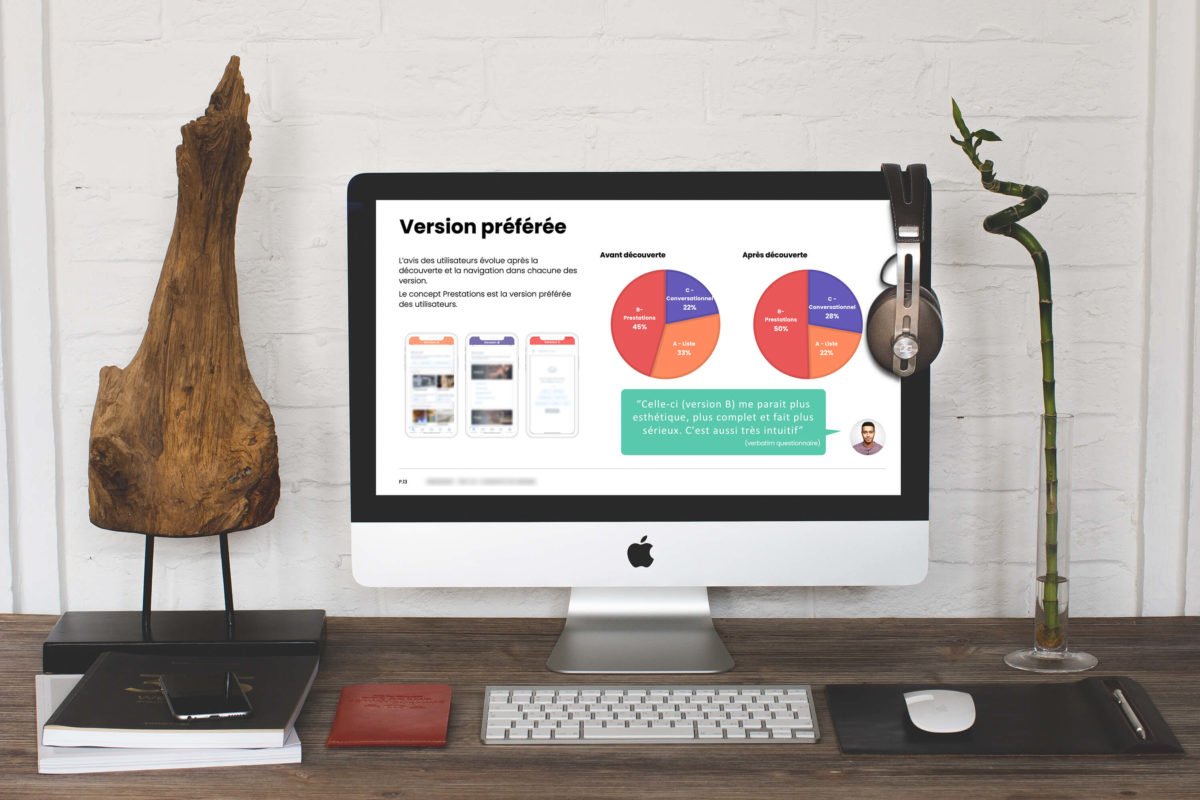


TL;DR
Built PagesJaunes’ remote user testing program from scratch: established infrastructure (Testapic), trained design team, created scalable documentation, and conducted 70+ tests. Research methodology adopted company-wide, transforming design culture from opinion-driven to evidence-based.
Infos
- Client: PagesJaunes (Solocal Group)
- Role: UX Research Lead & Design Operations
- Target Users: Design team, product managers, stakeholders seeking data-driven validation
Core Skills
- User Testing Strategy
- Research Operations
- Team Training
- Testapic Platform
- Stakeholder Management
The challenge: design by committee
Design decisions at PagesJaunes were regularly paralyzed by conflicting stakeholder opinions.
Teams spent more time navigating debates than solving user problems, creating frustrated product teams, delayed projects, and decisions based on who had the loudest voice—not what users needed.
The opportunity
Build a systematic, scalable research practice to shift the company from opinion-driven to evidence-based decision-making. The challenge wasn’t just implementing a tool—it was changing organizational culture.
My approach
1. Foundation
- Evaluated and implemented Testapic as remote testing platform
- Earned Research Certification, mastering protocol design and analysis frameworks
- Ran pilot tests on high-stakes projects to prove value
- Positioned myself as research hub: Centralized all user testing through single coordination point to build holistic product knowledge
2. Delivery & scale
- Designed test strategies across 8 methodologies: moderated/unmoderated usability tests, preference tests, behavioral surveys, Attrakdiff UX assessments
- Wrote rigorous protocols ensuring unbiased, consistent data collection
- Analyzed results from videos, metrics, and verbatims into actionable recommendations
- Supported designers on their projects, embedding research into workflows
- Conducted 70+ tests on live sites, apps, and interactive prototypes (Sketch + InVision)
- Built living knowledge base: Archived findings enabled test recycling and cross-product insights—past research continuously answered new questions
3. Enablement
- Created comprehensive documentation: guides, templates, frameworks, best practices
- Trained entire design team for autonomous testing
- Advised product, marketing, and leadership teams, expanding practice company-wide
Outcomes
- Stakeholder debates shifted from subjective preferences to objective user data
- Designers gained credibility backing proposals with evidence
- Research became company standard, not a design-only practice
Key learnings
- Centralized coordination accelerates delivery: Managing all tests built cumulative cross-product knowledge, enabling research recycling and faster responses to new questions
- Cultural change requires patience: Repeated value demonstration shifted norms over time
- Numbers matter: Quantitative data (surveys, metrics) had superior impact on team alignment compared to qualitative methods (videos, moderated sessions)
KEY METRICS
- 70+ tests conducted
- 100% Design team trained
- 3+ Departments adopting practice
Beyond metrics: The real impact was seeing designers confidently defend their work with data, and stakeholders asking “What do users say?” before sharing opinions.